

Are you waking at night with a numb or tingling hand? Do you shake your hand to “wake it up”? These are common signs of Carpal Tunnel Syndrome (CTS), a condition caused by compression of the median nerve as it travels through a narrow passageway at the wrist known as the carpal tunnel.
Symptoms typically include numbness, tingling, burning, or discomfort affecting the thumb, index, middle, and part of the ring finger. Some people also notice reduced hand function or difficulty with small movements. Symptoms are often worse at night or during activities that involve holding the wrist in one position for a prolonged period of time.
The good news is that mild to moderate CTS can often be managed conservatively, particularly when identified early. The latest 2026 clinical practice guidelines support education and modification of aggravating activities, nighttime wrist splinting in a neutral position, and appropriate rehabilitation exercises as initial management.
Myth vs. Fact
Myth: “Carpal tunnel syndrome is caused by typing too much.”
Fact: Repetitive hand use can aggravate symptoms, but CTS is more complicated than simply spending too much time at a keyboard. Individual anatomy, repetitive or forceful gripping, wrist position, pregnancy, and certain medical conditions can all contribute.
3 Exercises That May Help with Carpal Tunnel Syndrome
1. Median Nerve Glide
Begin with your elbow bent and wrist comfortable. Slowly straighten your elbow while gently moving the wrist and fingers through a comfortable range. Return to the starting position. Perform 5-10 slow repetitions without provoking numbness or tingling.
Why it helps: Gentle nerve gliding encourages movement of the median nerve through surrounding tissues without aggressively stretching an already sensitive nerve.
2. Tendon Glides
Begin with your fingers straight. Slowly move through a hook fist, full fist, and straight fist before returning to the starting position. Repeat 5-10 times.
Why it helps: Tendon gliding encourages movement of the finger flexor tendons through the wrist and helps maintain hand mobility.
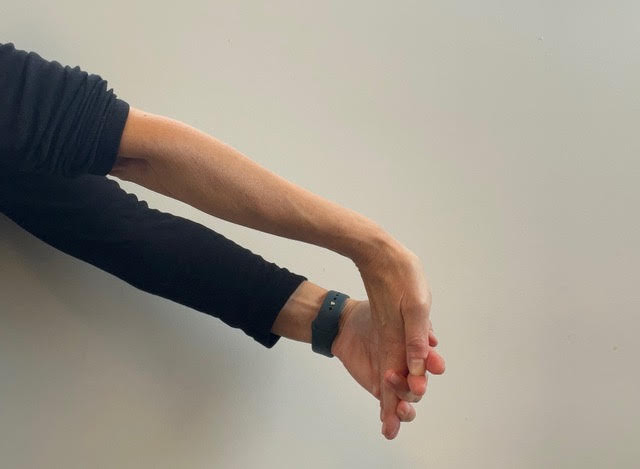
3. Gentle Wrist Stretch
Extend one arm in front of you. Using the opposite hand, gently bring the wrist and fingers backward until you feel a mild stretch through the forearm. Hold 15-20 seconds and repeat 2-3 times.
Why it helps: Stretching can form part of a conservative program for mild to moderate CTS. It should remain comfortable and should not reproduce numbness or tingling.
When Should You Seek Help?
If numbness is not improving or is getting worse, hand function is declining, you begin dropping objects, or you notice weakness or muscle loss around the thumb, a clinical assessment is recommended. Early intervention increases the likelihood of a successful outcome.
A proper examination is also important because symptoms originating from the neck or elsewhere along the median nerve can sometimes resemble carpal tunnel syndrome.
Clinical Pearl
Nighttime symptoms are an important clue. Keeping the wrist in a neutral position with a properly fitted night splint can reduce pressure within the carpal tunnel and is one of the recommended first-line strategies for mild to moderate CTS.
Don’t ignore persistent hand numbness. Our therapists can help identify the source of your symptoms and develop an individualized treatment plan to help restore comfort and function.
This article incorporates recommendations from the 2026 Clinical Practice Guideline: Erickson M, Lawrence M, Lazinski MJ, Scott K, Martin RL. Hand Pain and Sensory Deficits: Carpal Tunnel Syndrome: Revision 2026. J Orthop Sports Phys Ther. 2026;56(4)–CPG79.
Ready to Book?
If you’re experiencing persistent numbness, tingling, or discomfort in your hand or wrist, our team can help identify the cause of your symptoms and recommend an appropriate treatment plan.
Book with Dr. Roberta Da Re, who has a special interest in hand and wrist complaints, or with any of our practitioners at Leaside Sports Medicine.


